Roll Back Malaria
Background
Since 2008, Y’s Men International (YMI) has been actively engaged in fundraising and awareness initiatives to support the global fight against malaria. YMI is a long-standing member of the RBM Partnership to End Malaria, the global platform that unites governments, civil society, and development partners in coordinated action toward malaria elimination.
Between 2010 and 2019, YMI supported malaria programmes implemented by the International Federation of Red Cross and Red Crescent Societies (IFRC). YMI funds contributed to projects in Sierra Leone, Togo, and Tanzania, focusing on social mobilisation, behaviour change communication, and household-level support for the distribution and proper use of long-lasting insecticidal nets (LLINs) through the “Hang Up” and “Keep Up” campaigns.
In 2020, YMI entered into a multi-stakeholder partnership with the World YMCA to support the Global Fund’s efforts to combat AIDS, tuberculosis, and malaria, benefiting from double-matching funds from the UK government’s international development arm. Through this effort YMI became part of a global coalition helping to raise malaria awareness and strengthen community engagement.
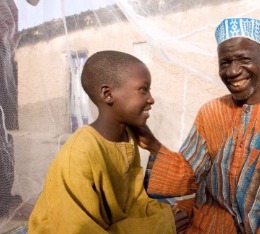
Roll Back Malaria – Today
As part of Y’s Men International Strategy 2032, Roll Back Malaria (RBM) was adopted as YMI’s Unified Global Project, reaffirming the organisation’s commitment to both community and global health. In 2025, a renewed RBM partnership model was introduced, enabling YMI to deliver a direct and measurable impact in malaria-endemic countries.
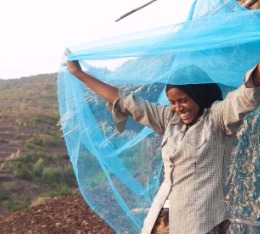
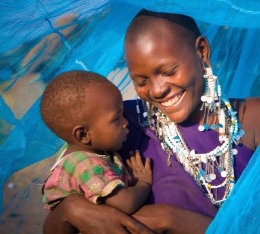
The approach is built on close collaboration among local YMI clubs, YMCAs, government health departments, and various RBM partners. Planned over a five-year period, the project commits CHF 360,000 to the fight to end malaria through YMI contributions, local participation, and matching grants from funding partners. Key activities include malaria awareness and education, distribution of insecticide-treated mosquito nets, and support for vaccination efforts, with progress and impact monitored annually to ensure accountability and measurable results.
Current project countries include Botswana, Cameroon, Zambia, and India, with additional partnerships expected.
Key Facts
- Malaria is a life-threatening disease caused by parasites that are transmitted to people through the bites of infected female Anopheles mosquitoes. It is preventable and curable.
- Globally in 2024, there were an estimated 282 million malaria cases and 610 000 malaria deaths in 80 countries.
- The WHO African Region carries a disproportionately high share of the global malaria burden.
- In 2024, the WHO African Region was home to 95% of malaria cases (265 million) and 95% (579 000) of malaria deaths.
- Children under 5 accounted for about 75% of all malaria deaths in the Region.